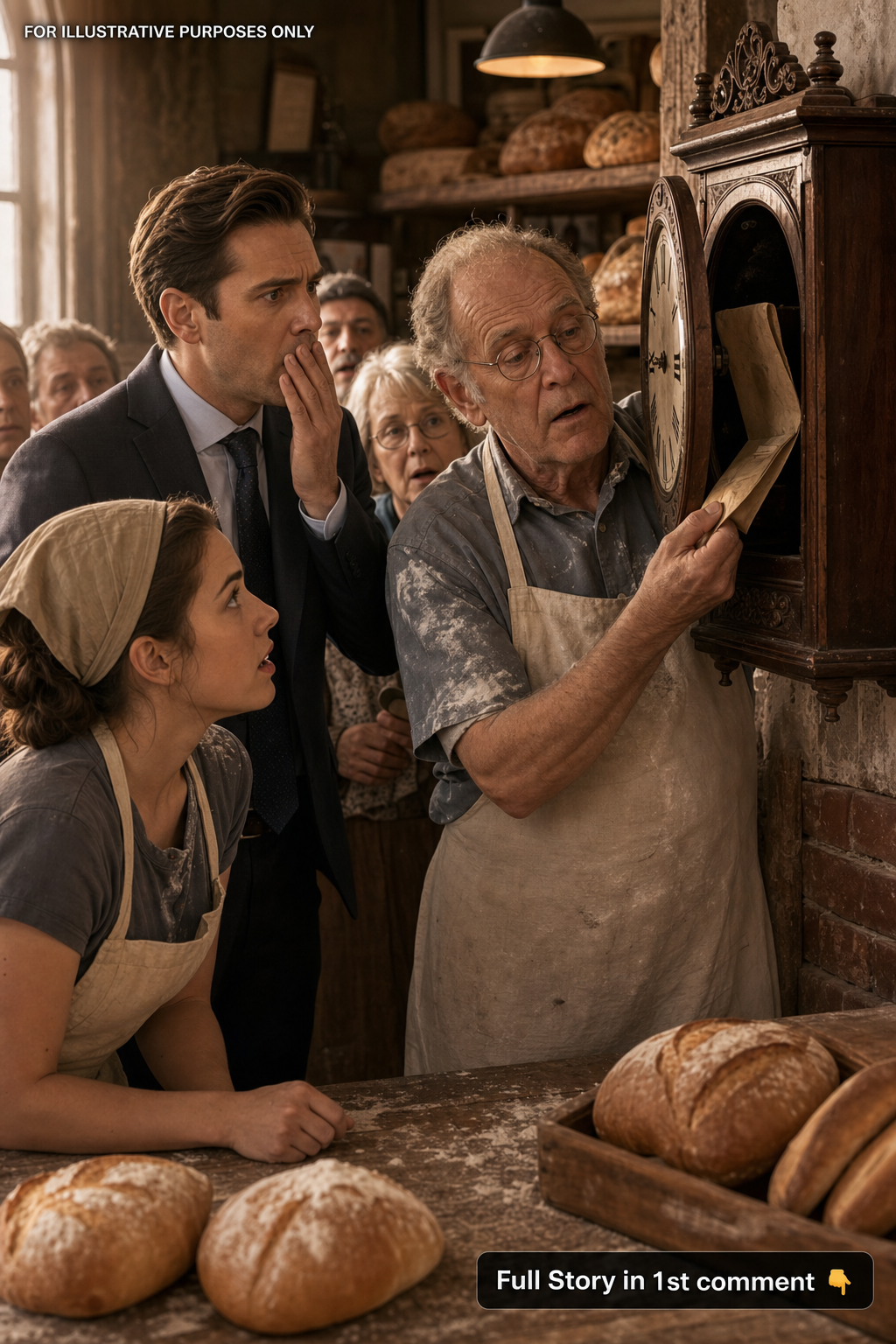
The original deed revealed that my father had not purchased the bakery alone. In 1932, during the hardest winter our neighborhood remembered, three families combined their savings to keep the ovens running: the Morettis, the Okafors, and the Haddads. Over the decades, two families moved away and communication faded. My father eventually operated the shop as if it belonged entirely to us, but the deed preserved equal ownership shares for the descendants of all three founders. Leila Haddad was the last direct descendant of one family. Her grandmother had sent her to apprentice with me without explaining why, hoping she would love the work before learning she had a claim to it. The third share belonged to a community food cooperative that had inherited the Okafor interest.

Marcus called the deed obsolete and insisted the property records named our family. The developer disagreed. A handwritten amendment, properly witnessed and later registered, prohibited any sale unless all three owners consented. The final clause went further: if one owner attempted a sale without notifying the others, that owner’s voting rights transferred temporarily to the workers until mediation was complete. By signing the secret contract, Marcus had triggered the clause. My own surprise was genuine; I knew about the shared deed but not the amendment. My father had hidden a letter with it explaining that ownership was never meant to reward the loudest heir. It was meant to protect the ovens, the jobs, and the neighborhood that had kept all three families alive.

Leila could have used her share to punish Marcus. Instead, she requested a meeting with the cooperative and every bakery employee. Together, they designed a succession plan. I retained a small share and became an advisor. Leila took charge of production, the cooperative managed community programs, and Marcus was offered responsibility for online orders and wholesale accounts—but only as a salaried manager during a one-year trial. He nearly refused. Then he saw customers lining the sidewalk with handwritten memories of first dates, birthday cakes, and free bread delivered during layoffs. For the first time, he understood that the balance sheet he carried measured revenue, not value. He tore up the developer’s contract and accepted the trial.

The year was not easy. Marcus and Leila argued about prices, packaging, and whether cinnamon rolls belonged on the website banner. But sales grew, employees received profit-sharing, and the bakery began supplying breakfast to two local schools. On my first anniversary of retirement, the wall clock was repaired. At noon, Marcus stopped work and apologized publicly to Leila and the staff. He said he had mistaken inheritance for permission. We placed copies of the deed beneath glass near the entrance and listed all three founding families above the door. The original returned to its hiding place behind the clock, where it remains—not because it is secret anymore, but because every hour it marks belongs to more than one family. This story is entirely fictional and created for entertainment.





Leave a Reply