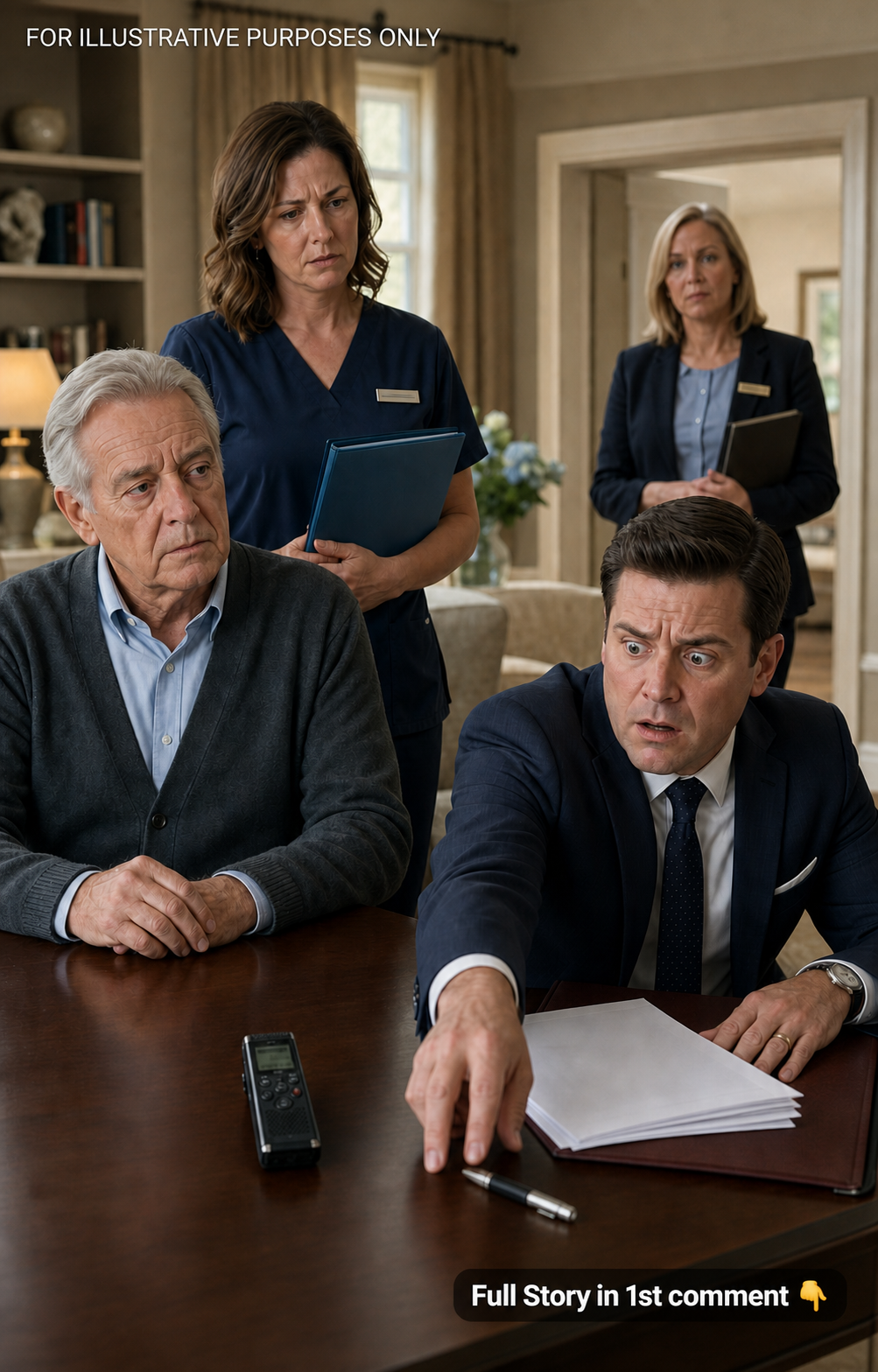
Adrian stared at the signature page. At the top, in large print, were the words: Acknowledgment of Recorded Statement. Grandpa had signed a declaration confirming that he understood the conversation, recognized every person present, and consented to investigators using the recording. The property-transfer page had been removed from Adrian’s packet before he entered the room. The residence administrator, Ms. Chen, had switched it after Adrian asked a staff member to witness documents without reading them. That request triggered the facility’s exploitation protocol. Adrian pointed at Grandpa. “He can’t consent to anything. You all heard him.” Grandpa straightened in his chair. Then he recited the date, the names of everyone present, the amount remaining on his mortgage, and the registration number of Adrian’s shell company.
His confusion had been an act. Two weeks earlier, Grandpa noticed that Adrian kept mentioning details from private bank statements. We checked his email and found forwarding rules sending financial messages to an unfamiliar address. The address belonged to Adrian’s assistant. The blue folder contained a clean cognitive assessment from an independent geriatric specialist. It also contained bank alerts, email records, and a report from a licensed investigator. The “doctor” Adrian brought was not currently licensed. He had lost his medical license after falsifying insurance examinations. Casino surveillance showed Adrian paying him in cash.
The recorder captured both men discussing their plan in the hallway. Once Grandpa appeared incompetent, Adrian intended to become temporary guardian, transfer the lake property, and demolish twelve modest cabins. A developer had promised him a substantial fee if the land could be cleared before the historical-preservation hearing. Adrian’s attorney later argued that no theft occurred because the transfer was never completed. Investigators disagreed. The forged reports, attempted fraudulent conveyance, unlawful email access, and conspiracy were already documented. The fake doctor cooperated. Adrian eventually pleaded guilty to attempted exploitation of a vulnerable adult and computer fraud. He was ordered to repay Grandpa’s legal and investigative costs. But Grandpa’s real surprise was the certified deed.
He had transferred the lake house and cabins into a nonprofit trust the previous day. The property would become an affordable retreat for family caregivers—people who spent years looking after aging parents, disabled spouses, or ill children and rarely had money for a vacation. “I wanted the land to remain useful,” Grandpa said. “Just not useful to Adrian.” The preservation board approved the plan. Volunteers repaired the cabins instead of demolishing them. The first guests arrived the following summer. Grandpa lived long enough to sit on the dock and watch three exhausted families discover kayaks, quiet mornings, and rooms where nobody needed them for an hour. He died peacefully at eighty-nine. At his memorial, I placed the little recorder beside his photograph. It had exposed Adrian, but that was not why it mattered most to me. On the final unused track, Grandpa had left a message. “Lena, getting old does not make a person invisible. Thank you for looking at me instead of through me.” The lake property was never his last test of us. The test was whether we would listen while he was still here.





Leave a Reply