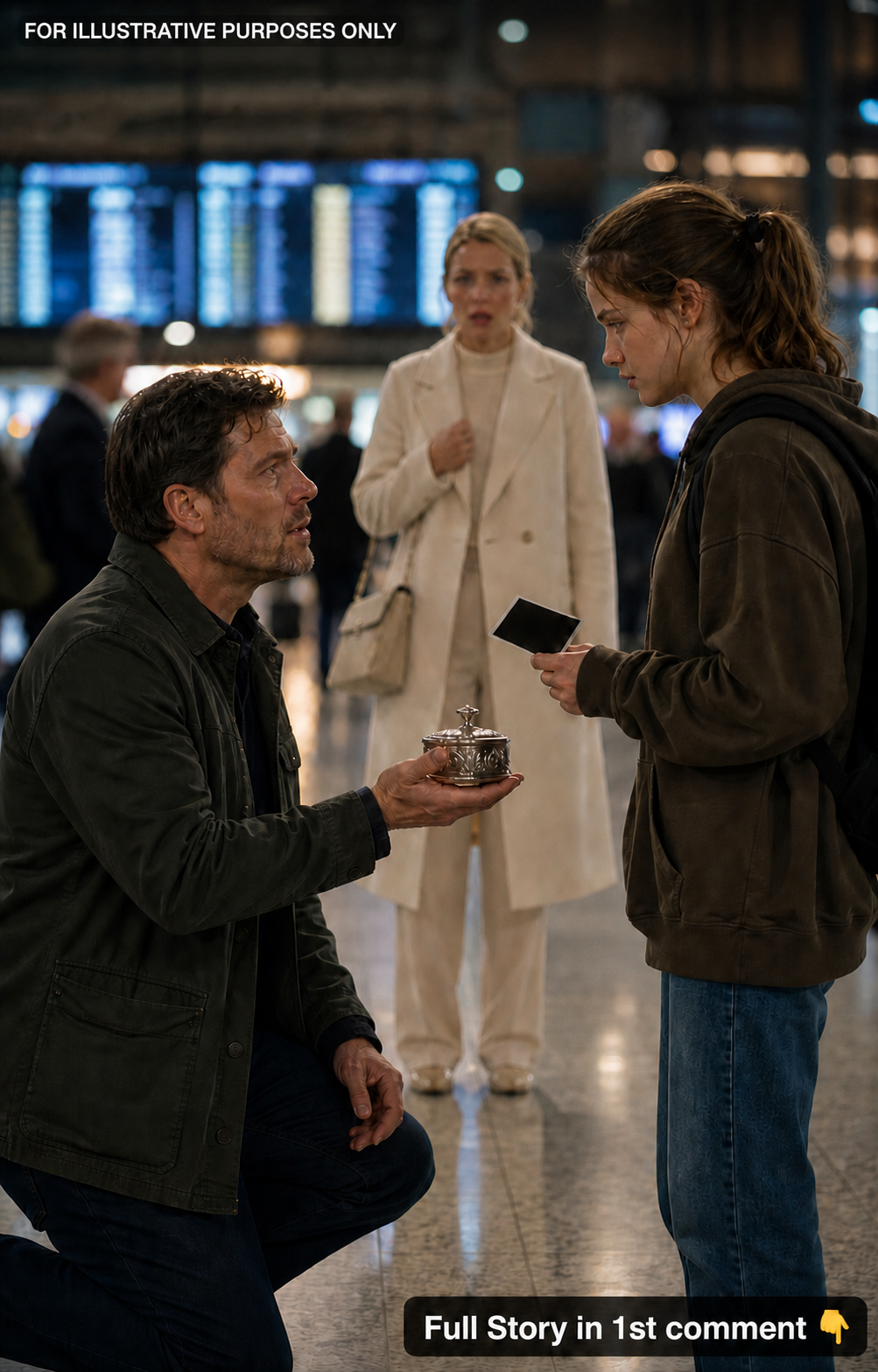
The date beneath the photograph looked fresh, but the image itself had faded edges. Celia stopped backing away when airport security approached. “It isn’t what you think,” she said. For the first time, I agreed with her. Nothing could be what I thought. Elise’s car had gone through a mountain guardrail seventeen years earlier. Search crews recovered wreckage, blood, and the compass pendant I had given her. Her body was never found, but she was legally declared dead. Mara handed me the photograph. The date was not a claim about when it was taken. It was an instruction: yesterday’s date corresponded to locker 0718 in the airport baggage hall. The claim key opened it. Inside we found medical records, letters, a prepaid phone, and a video file. Mara pressed play. Elise appeared on the screen, older and visibly ill.
She explained that the crash had not been an accident. Celia, then Elise’s business partner, had discovered that their medical-transport company was falsifying maintenance records. Elise planned to report it. The company’s operations manager sabotaged her car and arranged evidence suggesting she had died. Elise survived the fall with serious injuries. A rural couple found her before the search teams did. Terrified that the people responsible would try again, she entered a protected-witness arrangement after contacting a federal investigator. Celia knew she was alive because she had helped deliver documents to investigators. The photograph showed the night Celia brought newborn Mara to Elise in a protected apartment. Mara was not my daughter. She was Elise’s niece—the child of Elise’s younger sister, who died shortly after giving birth. Elise raised her under a new identity.
“Why didn’t you tell me?” I asked Celia. Her answer broke something in me. Because Elise had begged her not to. The investigation initially collapsed when a witness disappeared. Elise believed contacting me would expose us both. Celia promised to protect me, and over years that promise became a secret she could no longer confess—especially after we fell in love. Elise’s final message said the missing witness had recently resurfaced. Prosecutors were reopening the case, but before Elise could give her new statement, she suffered a stroke. She had not vanished three days earlier; she was unconscious in a hospital under her protected name. The prepaid phone rang. A federal case officer told Mara it was finally safe to bring us in.
We reached the hospital that night. Elise could not speak, but when I wound the silver music box, her eyes opened. She squeezed my hand once, then Mara’s. She died two days later, knowing the case would continue. The operations manager and two former executives were later indicted for sabotage, fraud, and obstruction. The truth did not return the seventeen years we lost. It did clear Elise’s name and reveal why the maintenance scandal had been buried. Celia and I spent months in counseling. Her silence had protected me, but it had also denied me a choice. Forgiveness was not immediate or simple. Mara stayed with us while finishing school. On graduation day, she wore the two halves of the compass pendant joined on one chain. The photograph now sits beside the music box. The handwriting beneath it still shows the date that brought us together—not because it marked when the picture was taken, but because it marked the day a locked past was finally opened.





Leave a Reply