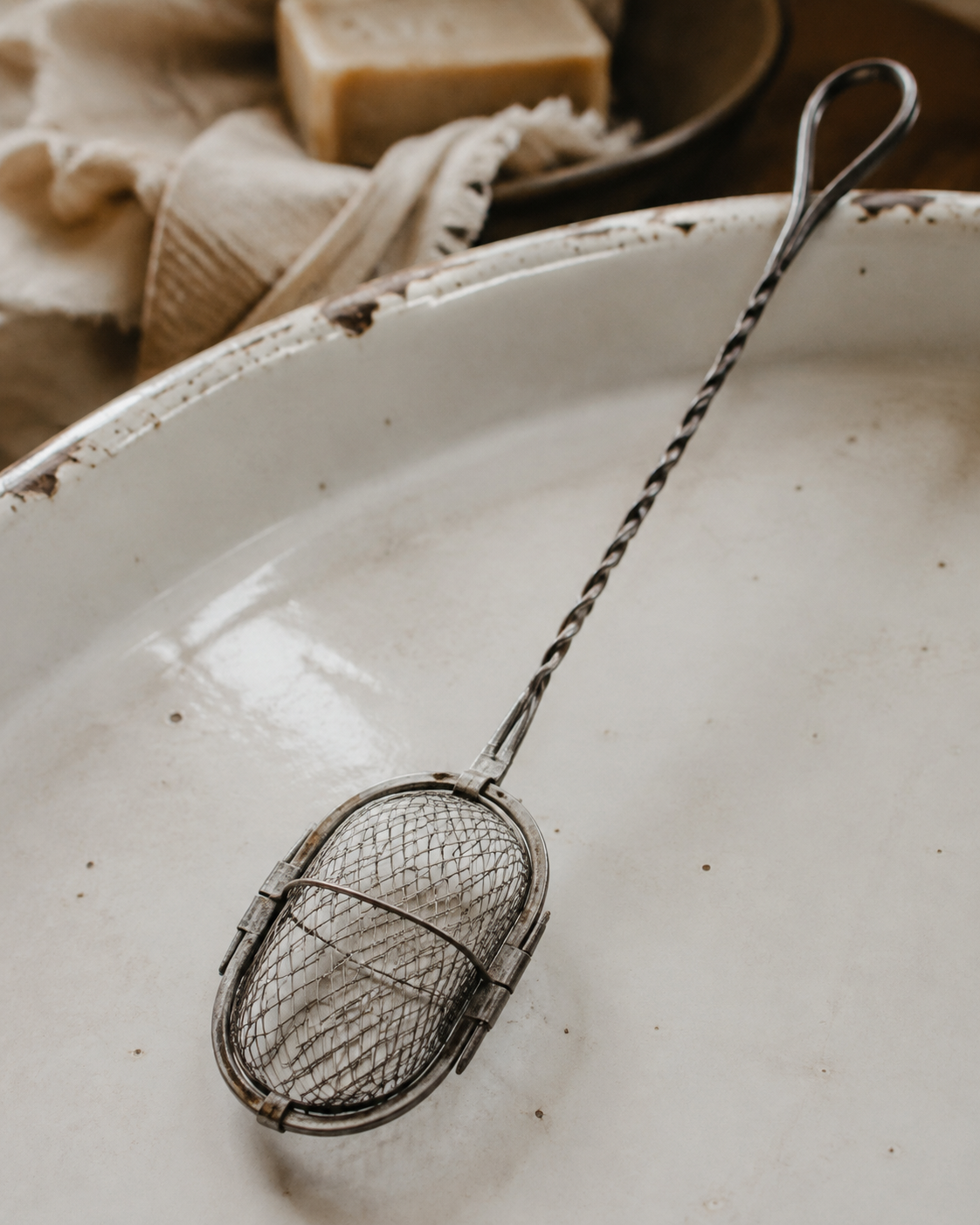
For as long as I can remember, a strange wire object hung beside my mother’s kitchen sink.It looked like a tiny metal cage attached to a long, twisted handle. The metal had darkened with age, and the small hinge no longer opened easily.As children, we occasionally played with it when Mom wasn’t looking. My brother believed it was a miniature fishing net. I thought it might have been used for making tea.
Mom never explained it. She simply returned it to its hook beside the sink.Years passed, the kitchen was renovated and nearly every old appliance was replaced. Still, the wire cage remained.
When Mom eventually moved into a smaller home, we began sorting through the things she had collected. Most of the kitchen utensils were easy to identify—but then I found the little wire cage again.“Why have you kept this for so long?” I asked.Mom laughed and opened the hinged metal compartment.Inside were several tiny, dried pieces of soap.
The mysterious object was a soap saver, a practical household tool once used to prevent leftover soap from going to waste.When a bar of soap became too small and slippery to hold, the remaining pieces were placed inside the wire cage. The cage was then closed and swished through hot water.As the small fragments dissolved, they created soapy water that could be used for washing dishes, cleaning household surfaces or scrubbing laundry.
Some soap savers had long handles so they could be moved through deep wash tubs. Others were smaller and designed to hang near a kitchen or bathroom sink.Before modern liquid soap and inexpensive detergents became common, families tried to use every last piece of a soap bar. Even the smallest fragments had value.Mom told me that her own mother had used the wire cage on laundry day. She filled a large metal basin with hot water, placed the leftover soap pieces inside the saver and stirred until the water became cloudy with suds.Years later, Mom continued the habit—not because she couldn’t afford another bar of soap, but because wasting something useful felt wrong.
“That little cage survived longer than three washing machines,” she said proudly.I finally understood why it had remained beside the sink through every renovation.It wasn’t simply an outdated cleaning tool. It represented the lessons Mom had inherited from her mother: take care of what you own, use things completely and never assume that something small has no value
.I cleaned the old soap saver and hung it in my laundry room. I don’t use it every week, but I occasionally place leftover soap pieces inside—just as Mom and Grandma once did.In a world built around disposable products, the little wire cage carries a surprisingly relevant message.Sometimes the objects that look the strangest were created to solve the most ordinary problems.This is a fictionalized story inspired by the real history and purpose of vintage wire soap savers.





Leave a Reply