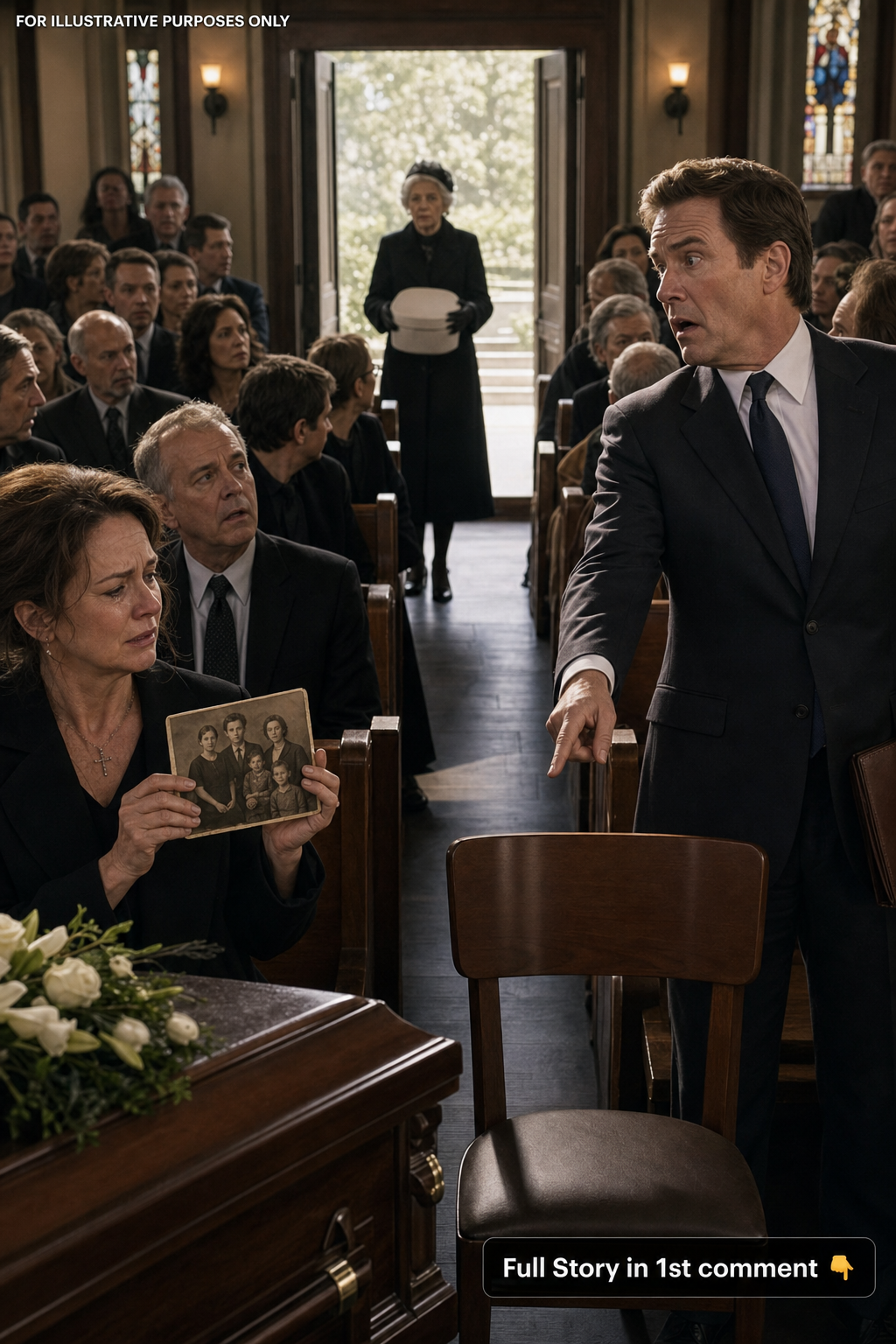
The final photograph showed my mother, Evelyn, standing on a railway platform beside the stranger from the chapel. Between them was a baby wrapped in my wedding veil. On the back, in faded ink, David had written: “For Claire, when the silence becomes heavier than the truth.” The stranger introduced herself as Ruth Calder, my mother’s younger sister—a woman I had never been told existed. She explained that Evelyn had given birth at seventeen and placed the baby with a couple in another state. That child was David. The revelation struck the room like thunder: my husband had been my mother’s son. Before anyone could misunderstand, Ruth raised one gloved hand. David was not Evelyn’s biological child. Evelyn had found him abandoned in the station waiting room during a snowstorm and kept him safe until authorities arrived. The adoption records later named Evelyn only as the finder, but David had spent years believing she had saved his life.

The veil had belonged to Evelyn, not me. David found it in a charity shop decades later with the hatbox and train ticket still inside. When he met me, he recognized my surname and eventually confirmed that I was Evelyn’s daughter. He did not marry me out of debt, Ruth said; he had already fallen in love before discovering the connection. But he hid the story because Evelyn had begged him never to expose the abandoned child or the scandal that followed her. The birth certificate in the box was mine, included to prove that Evelyn had later built the family she had once feared she would never have. David’s brother, Paul, lunged for the papers because he knew the rest: their parents had not legally adopted David until he was six, and Paul had used that fact to challenge David’s ownership of the family printing company.

The lawyer opened David’s final statement. Paul had been pressuring him to surrender the company by threatening to reveal the sealed adoption file. David had refused and quietly converted the business into an employee-owned trust. The empty chair represented the person whose identity remained unknown—the woman who left him at the station. David did not want her condemned. In a letter, he wrote that abandonment and rescue could exist in the same story, and that he had spent his life choosing which act would define him. Ruth had not come to claim money. She came because David had asked her to tell me that my mother’s bravest act happened long before I knew her. Paul’s inheritance challenge failed; there was nothing left for him to seize except the minority shares David had already assigned to the workers.

After the service, I carried the hatbox home and unfolded the veil across our dining table. Tucked into its hem was a note David had written during his final hospital stay: “I married you because you laughed when the rain ruined our first picnic. Everything else was history, not destiny.” Ruth and I became family slowly, through coffee, photographs, and the awkward correction of decades of silence. We placed the empty chair in the printing shop’s reading room, beside a display honoring Evelyn and the station staff who helped save an unnamed baby. Paul eventually apologized, though forgiveness required more than one conversation. The greatest twist was not that David had hidden another life. It was that every secret pointed back to a single ordinary act of kindness—and he had spent thirty-one years trying to pass it on. This story is entirely fictional and created for entertainment.



Leave a Reply