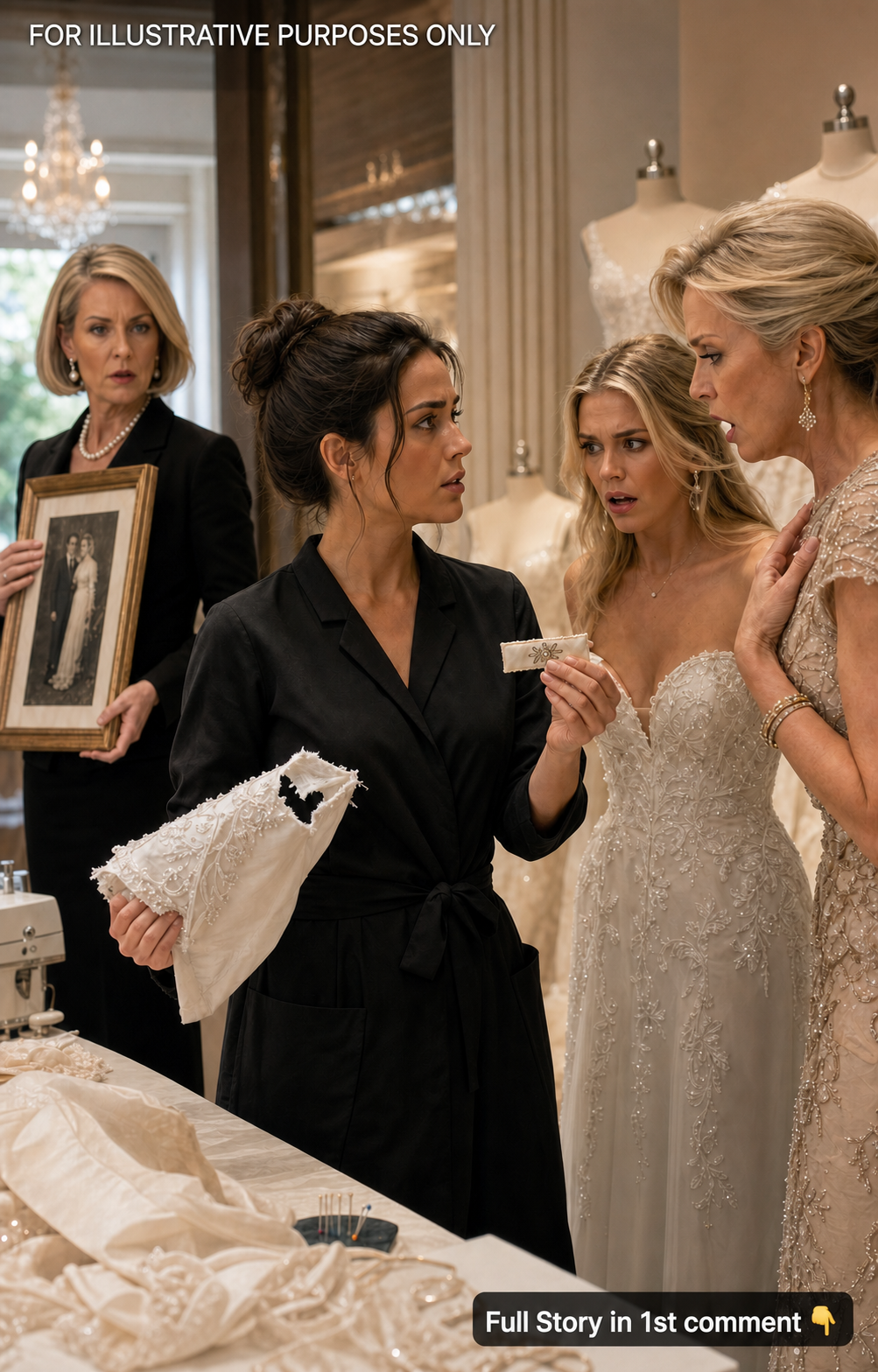
The photograph had been taken twenty years earlier in the original Maison Vale workroom. My mother, Amara Reyes, stood beside the unfinished gown. Vivian—then the company’s merchandising director—was cutting a sample from the train. Evelyn locked the boutique doors. She told us the story nobody had told me. My mother had designed a twelve-piece bridal collection built around hand-embroidered moths, a symbol of transformation. Days before its debut, she discovered that Vivian was sending patterns to a mass-market manufacturer and registering selected designs under another name. Amara prepared to expose her. Then the archive warehouse burned. The company reported the collection destroyed. My mother died in a traffic collision six weeks later, before the ownership dispute reached court. With no samples and incomplete records, the case disappeared. But the gowns had not burned.
Vivian had removed them the night before the fire. Over the years, she sold several privately through intermediaries. Sloane’s gown was the last one she kept. “That is a lie,” Vivian said. “A photograph proves nothing.” The silver moth proved more. My mother stitched a tiny sequence of knots into every label. They encoded the design number and date. I knew because she had taught me the pattern when I was a child. The label in Sloane’s gown identified it as Look Twelve from the missing collection. Evelyn opened the old frame. Hidden behind the photograph was a carbon copy of the original collection inventory bearing my mother’s signature and the same codes.
Evelyn had preserved it because she never believed the official explanation. She had hired me after seeing my repair portfolio and recognizing Amara’s name, but she had been afraid to reopen an accusation she could not prove. Now we had the gown, the coded label, the inventory, and Vivian’s admission that it came from the archive sale. Sloane sat down, devastated. “Did you know?” she asked her mother. Vivian insisted she had only protected the business. Then Evelyn produced insurance correspondence showing that the manufacturer receiving the stolen patterns had paid a company Vivian controlled.
The boutique’s attorney contacted police and the insurer. A wider investigation followed. The fire itself could not be conclusively tied to Vivian after so many years, but the theft, fraudulent sales, and royalty records were documented. A civil settlement returned ownership of the surviving designs to my mother’s estate. Sloane postponed her wedding by one month. She offered to return the gown as evidence and chose a different dress. I surprised her. After investigators released it, I restored Look Twelve using my mother’s notes. I replaced the damaged sleeve but left one almost invisible line of silver thread where it had torn. Sloane wore it with my permission and credited Amara publicly as the designer. The remaining eleven gowns were reconstructed over the next year. Maison Vale presented them in a memorial exhibition, with profits funding apprenticeships for designers who could not afford fashion school. Evelyn offered me the title of creative director. I accepted on one condition: every maker’s name would appear inside every dress. The silver moth is now our mark, but the tiny label beneath it matters more. For years, Vivian believed she could erase my mother by removing her name. Instead, one hidden signature brought an entire collection home.





Leave a Reply