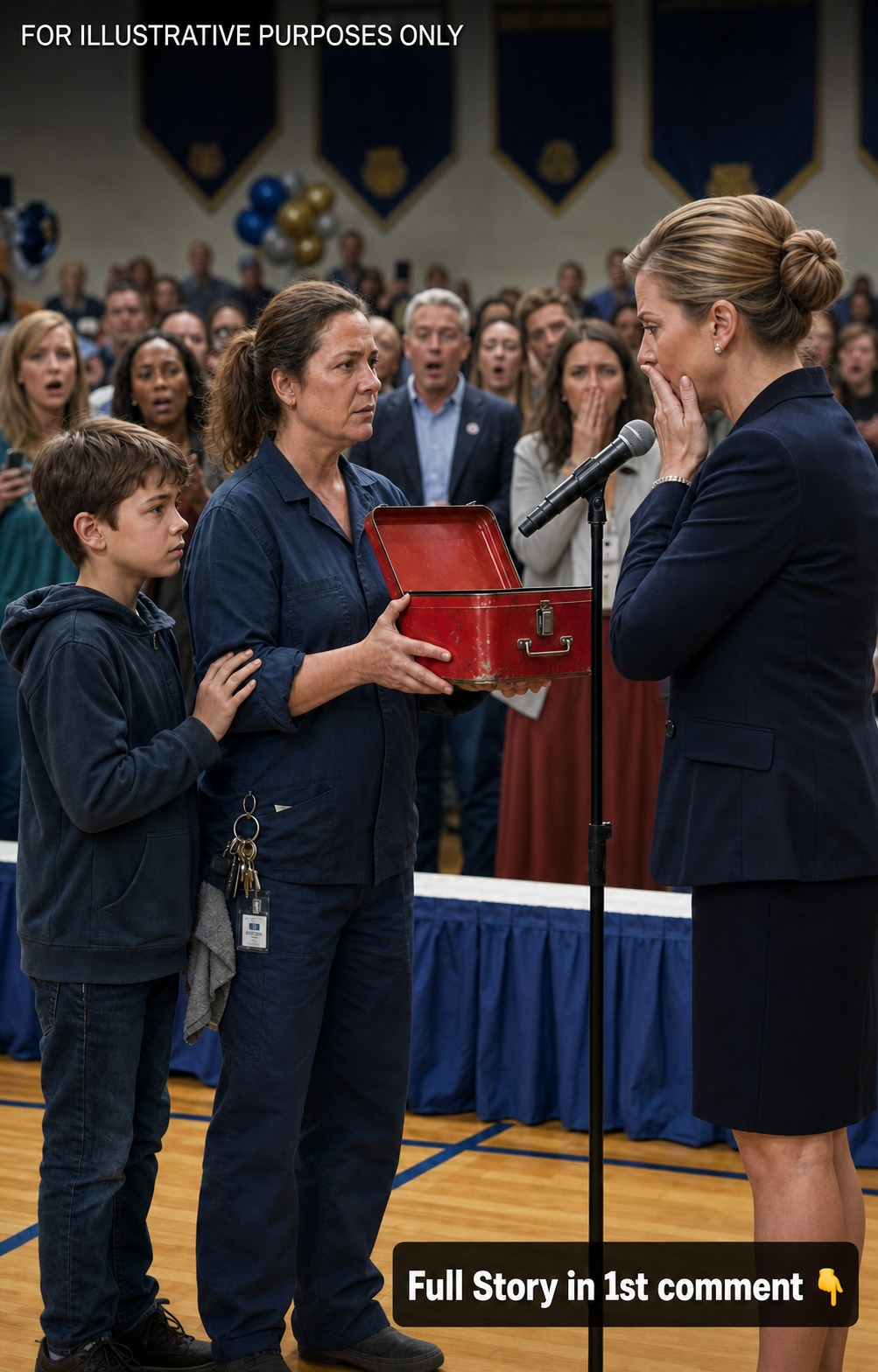
The object in Noah’s hand was not money. It was a spare security camera no larger than a matchbox. Rosa had bought it after supplies began disappearing from the custodial closet. At first it was detergent and paper products. Then someone used her master key and returned it to the wrong hook. She reported both incidents, but Principal Kessler dismissed them as inventory mistakes. So Rosa placed the camera inside her red lunchbox, cut a tiny opening in the side, and left it on a shelf facing the administrative corridor. The lunchbox also contained a memory card. The school board president, Dr. Patel, stopped Principal Kessler from clearing the gym. An off-duty police officer attending with his daughter took possession of the card and connected it to the projector. The first clip showed Rosa entering the office at 8:43.
The principal pointed triumphantly. Then the full recording continued. Rosa had entered because an alarm was beeping. She never approached the cash box. She silenced the alarm, checked the window, and left thirty seconds later. At 9:06, the assistant athletic director, Martin Cole, appeared. He wore gloves. He opened the office using a key taken from an envelope beneath Principal Kessler’s desk blotter, removed the fundraiser cash, and slipped it into a equipment bag. Kessler looked genuinely stunned. But the next clip explained her panic. At 9:14, she entered, saw the empty cash box, and called Martin—not the police. The lunchbox camera had captured audio. “You said you’d wait until after the audit,” she hissed. Martin answered through the speakerphone. “You wanted the budget hole covered. Now it is.”
The missing fundraiser money was only part of a larger scheme. For two years, Martin had submitted inflated invoices for sports equipment through a company owned by his brother. Kessler approved them to conceal unauthorized spending from another account. When auditors began asking questions, they planned to replace the missing funds temporarily with cash from the fundraiser. Rosa’s access record gave them someone convenient to blame. Noah knew about the lunchbox because Rosa had once shown him the safe corner behind the stage during a frightening argument between adults. When the public accusation began, he went there and found it. Police recovered the fundraiser money from Martin’s car. A later audit uncovered the invoice fraud. Both administrators were removed; criminal charges followed. The district offered Rosa a private apology. She refused.
“You accused me publicly,” she said. “You will correct it publicly.” One week later, the school board returned to the same gym. Dr. Patel read a statement clearing Rosa completely and acknowledging that her earlier reports had been ignored. The district paid her lost wages, covered legal advice, and adopted a rule requiring two-person review before any employee could be publicly named in an investigation. Rosa kept her job, but she asked for one change: a student emergency-support fund managed by parents, teachers, and an outside accountant. The first donation came from families who had watched her humiliation. Noah donated his allowance—seven dollars and thirty-five cents—inside the red lunchbox. Rosa still carries it every day. The dent remains. So does the tiny camera opening. She says both are useful reminders: truth does not always arrive in a polished folder. Sometimes it is carried onto a stage by the one person in the room brave enough to say, “You should look inside.”





Leave a Reply