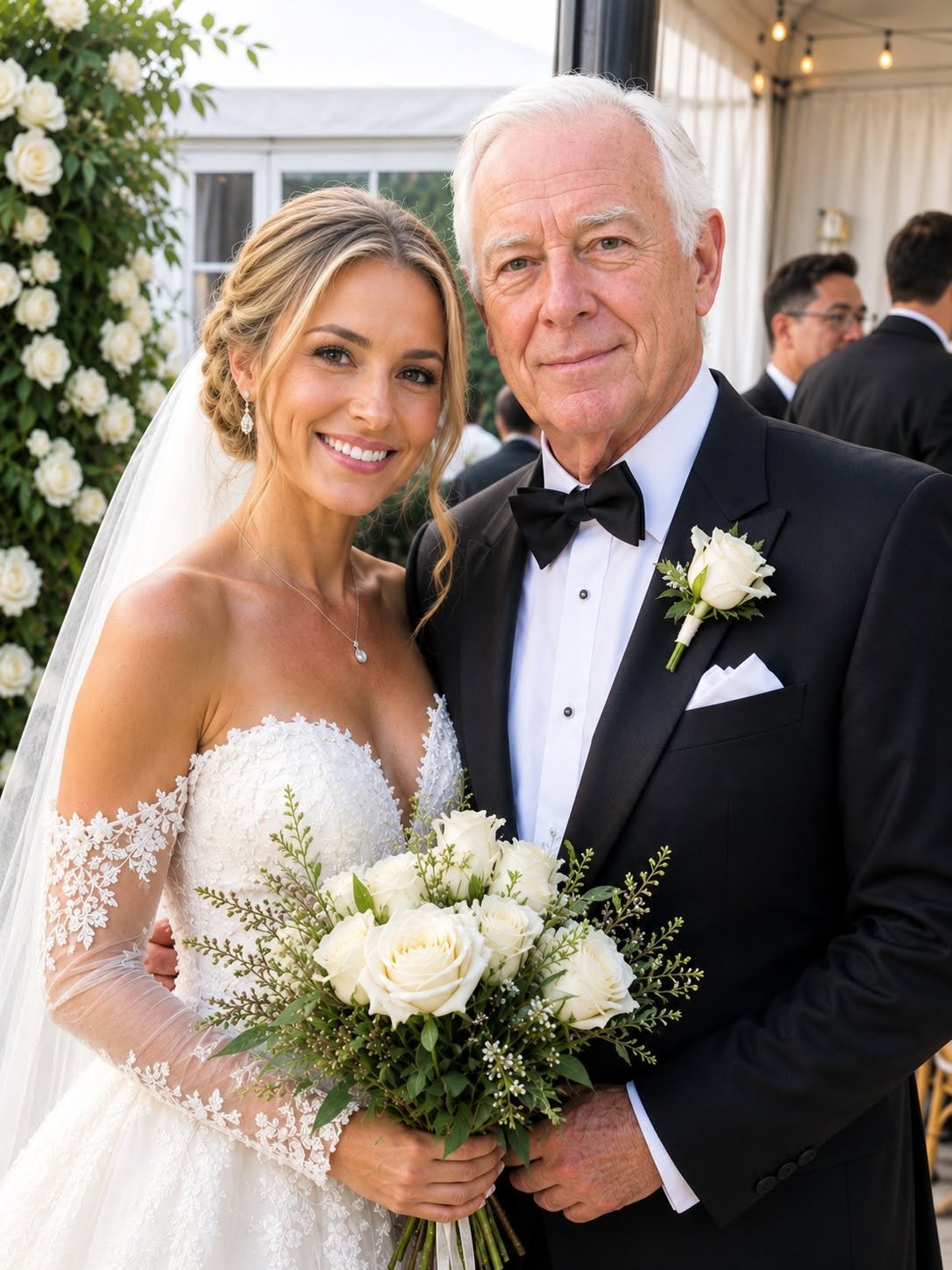
When I married Arthur, I knew everyone believed I was after his wealth. I kept telling myself their opinions didn’t matter, yet on his deathbed, he placed a cardboard box in my hands and informed me I wouldn’t receive his money. After the funeral, I opened it and discovered what he thought I’d truly wanted all along.
When Arthur gave me the cardboard box, his three children were gathered outside his hospital room, already deciding what they thought I deserved.
Arthur heard them too. His eyes remained shut, but his grip on my hand tightened whenever their voices grew louder.
Then he opened his eyes.
“Camille,” he whispered.
I bent closer. “I’m right here.”
He slipped one frail hand beneath the blanket and pulled out an old cardboard box. My name was written across the top in black marker.
“I’m right here.”
“Arthur, what’s this?” I asked.
A weary smile touched his face.
“You won’t get my money, darling,” he said.
My throat tightened.
I hated the way my heart sank, not because I’d married him for it. I hadn’t. But somewhere deep inside, a frightened part of me had hoped his money might finally make me feel secure.
“You won’t get my money, darling.”
Arthur noticed it immediately.
He always noticed everything.
“But I’m giving you exactly what you wanted,” he whispered.
Outside the room, Deborah snapped, “We should be in there! That woman isn’t family!”
Arthur pushed the box toward me.
“Open it after my funeral,” he said. “Promise me, Camille.”
“Arthur…”
“Promise.”
So I promised.
Two days later, my husband passed away.
“I’m giving you exactly what you wanted.”
And after the funeral, when everyone believed I’d lost in the end, I opened that box and found proof that Arthur had understood me far better than any of them ever had.
When Arthur and I married, people behaved as though they already knew how the story would end.
I was thirty-two. He was eighty-four.
That fact alone was enough.
His friends studied me over their wine glasses. Strangers at charity events looked first at my ring and then at Arthur’s walker. His children disliked me before I even finished introducing myself.
He was eighty-four.
Deborah was older than I was and never let me forget it. Alfred watched everything I touched. Norman smiled a little too often.
At our wedding reception, I was cutting into a piece of salmon when Deborah leaned in.
“I hope whatever number you have in your head is worth this.”
I set down my fork. “Worth what?”
“The way everyone is looking at you.”
Arthur rested his hand over mine beneath the table.
“Worth what?”
“Deborah,” he said, “don’t confuse cruelty with loyalty.”
Her lips tightened. “I’m protecting Mom’s place.”
I met her gaze. “I’m not trying to replace your mother.”
“Don’t speak about her,” Alfred said.
Arthur remained calm. “Sophia was my wife. Camille is my wife now. One does not erase the other.”
Norman chuckled briefly. “Dad, she’s younger than your daughter.”
“I’m not trying to replace your mother.”
“Then my daughter should know better than to behave this way.”
I wanted to leave. Most of my life had been spent leaving rooms before anyone could ask me to.
Arthur kept hold of my hand.
“Don’t spend your peace on people who came here angry,” he said.
“They think I’m a monster.”
“No,” he replied. “They think you’re a thief. There’s a difference.”
That almost made me laugh.
“They think I’m a monster.”
The truth wasn’t attractive enough to explain to people who had already made up their minds.
Arthur’s wealth did make life feel safer. I liked knowing the heating bill would always be paid. I liked not having to calculate every grocery purchase twice.
I liked falling asleep in a home where one bad week couldn’t leave me homeless.
But I didn’t marry him for his gold and diamonds.
I married Arthur because he was the first man who never made me feel temporary.
I didn’t marry him for his gold and diamonds.
One evening, shortly after the wedding, Arthur found me in the kitchen making chamomile tea with trembling hands.
“You only make chamomile when you’re overwhelmed,” he said.
I laughed softly. “I don’t think that’s true.”
“It’s true.”
“You could pretend not to notice, Arthur.”
“I’m eighty-four, Camille. I don’t have time to pretend I don’t see what’s right in front of me.”
I glanced down at the mug.
“You know, my ex-fiancé asked me to move out two weeks before our wedding. He said it was his apartment, so I had no right to stay. The man before him let me pay rent, but every time we argued, he reminded me my name wasn’t on the lease.”
“You could pretend not to notice, Arthur.”
Arthur pulled out the chair opposite me.
“When I was a kid,” I continued, “after my mother died, I stayed with relatives who meant well. But every room was always someone else’s spare room. I learned not to spread out.”
His expression softened. “So what do you want, Camille?”
I wiped my cheek with my sleeve. “I know what they all think of me, Arthur. But what I want is a place where nobody can tell me to pack.”
He sat quietly for a moment.
“So what do you want, Camille?”
“That,” he said softly, “is a very lonely sentence.”
Our marriage wasn’t some grand romance. It was hearty stew on rainy evenings, old movies he slept through, and crossword puzzles Arthur cheated on by claiming he somehow “remembered” impossible words.
It was me driving him to appointments, and him introducing me to every nurse by saying, “This is Camille. She keeps me alive… and respectable.”
Six months before he died, Arthur took me on a drive.
“Are you going to drop me off somewhere?” I teased.
Our marriage wasn’t a wild romance.
“No, darling.” He smiled. “We’re visiting a special old place.”
That special place was a small lakeside cottage with faded blue shutters, weeds along the walkway, and a porch sagging slightly on one side.
“It’s small,” I said.
“You sound surprised.”
“No, I just thought everything connected to you would be enormous.”
“Sophia hated the large and flashy things.”
“We’re visiting a special old place.”
I froze when I heard her name, but Arthur simply made his way toward the porch.
“This was hers,” he said. “Before me. Before the children. Before all the noise.”
I followed him up the steps.
The moment I rested a hand on the railing, my shoulders relaxed without permission.
“It feels peaceful here,” I said.
Arthur gazed out at the water. “Yes,” he said. “It does.”
“It feels peaceful here.”
A few months later, his health declined quickly.
First he stopped using the stairs. Then he stopped arguing with doctors. Before long, nurses began speaking to me in those careful voices people use when they’re worried.
His children visited more often, not to help, but to keep track of paintings, watches, and paperwork.
One afternoon, I arrived at the hospital carrying clean pajamas and Arthur’s crossword book. Deborah stood in the doorway with Alfred and Norman behind her.
“Family only,” she said.
He stopped arguing with doctors.
I lifted the bag. “He asked for these.”
“I’ll give them to him.”
“I’m his wife.”
She smirked. “On paper.”
The nurse at the desk looked up.
I felt that familiar urge to apologize and retreat.
“He asked for these.”
Instead, I stepped closer.
“Move, Deborah.”
Alfred laughed. “You forgot your role.”
“No,” I said. “You forgot mine.”
Arthur’s voice drifted from inside. “Let her in.”
Deborah turned. “Dad, you need rest.”
“Then stop making my wife fight to enter this room.”
“You forgot your role.”
Deborah stepped aside, whispering, “This ends soon.”
I walked past her.
Arthur looked smaller every day, but his eyes still brightened when they found me.
“You shouldn’t fight with them,” I said, setting down the bag.
“They drain me,” he replied. “You bring joy, darling.”
I laughed, and then tears came before I could stop them.
That evening, he asked everyone to leave except me.
“You bring joy, darling.”
That was when he handed me the box.
Two days later, he was gone.
At the funeral, I wore a simple black dress I had bought on sale. After the service, people gathered at the house.
Deborah approached with a drink in her hand.
“I hope you saved the receipt for that dress.”
The room gradually fell quiet.
“This is your father’s funeral,” I said. “Have some respect.”
Two days later, he was gone.
“Exactly,” she replied. “And after today, the performance is over.”
Norman stared into his drink. Alfred said nothing.
For two years, I had allowed them to shrink me because I believed dignity meant remaining silent.
Arthur wasn’t there to hold my hand anymore.
So I held myself.
“You got his money, Deborah,” I said. “Try not to lose his decency too.”
Someone near the doorway inhaled sharply. Even Alfred lowered his eyes.
I thought dignity meant silence.
Before Deborah could respond, Arthur’s lawyer, John, stepped between us.
“Arthur requested the reading to happen right after his funeral,” he said. “My office. One hour. All of you.”
Deborah smiled as if she’d been waiting for those words.
At the lawyer’s office, I sat at the end of the table with the cardboard box still unopened on my lap.
The lawyer began reading the main estate.
The mansion, business interests, investments, vehicles, and artwork all went to Arthur’s children.
“The primary estate leaves no monetary assets to Camille,” John said.
“My office. One hour. All of you.”
Deborah leaned back. “Nothing?”
“No money,” he confirmed.
She looked at me with open satisfaction. “You wasted two years.”
I inhaled slowly. I’d spent years telling myself I didn’t care.
Mostly, I didn’t.
But there is a special humiliation in being called greedy while ending up with nothing.
I stood. “If we’re finished, I’ll go.”
“You wasted two years.”
“Not yet,” the lawyer said.
Deborah frowned. “But the estate is settled. Don’t mess this up, John.”
“The primary estate is settled,” he replied. “Arthur also left instructions regarding a separate property.”
Alfred leaned forward. “What property?”
The lawyer opened another envelope.
Deborah narrowed her eyes. “What’s that?”
“This is a separate instruction,” he said. “This asset was never part of Arthur’s estate. It belonged to Sophia.”
“Don’t mess this up, John.”
Deborah’s smile vanished. “Our mother? Then it’s ours!”
“The lakeside cottage was her separate property. Arthur held a life estate, but Sophia left written instructions for what should happen after his passing.”
Norman frowned. “Then it comes to us, John.”
“No.”
Alfred straightened. “Explain that.”
The lawyer unfolded a letter.
“Sophia wrote, ‘If Arthur ever finds another woman who brings peace back into his life, give her the cottage. Not as payment. Not as charity. But as shelter. As a home should belong to the person who understands why it matters.’”
“Our mother? Then it’s ours!”
My grip tightened around the box. “I didn’t know about any of this.”
Deborah spun toward me. “Don’t act surprised.”
“I am surprised,” I said. “Arthur only gave me this box. He told me to open it after the funeral.”
The lawyer nodded. “Arthur completed the transfer last month. The deed has already been recorded. Camille legally owns the cottage.”
Alfred shoved back his chair. “We’ll fight it.”
“You may speak to another attorney,” the lawyer said. “But the transfer is valid.”
“Don’t act surprised.”
Deborah pointed at me. “You manipulated him.”
I looked directly at her.
“No. I sat with him. I fed him. I drove him to doctors. I listened when he missed your mother. I never asked him to erase her.”
For once, Deborah had no response.
I stood, holding the box against my chest.
“You can keep the mansion,” I said. “I never wanted a house where people stood in doorways deciding whether I belonged.”
“You manipulated him.”
Then I left before my legs gave out.
Back home, I sat on the bedroom floor with Arthur’s box between my knees.
“Okay,” I whispered. “Show me what you meant.”
The first thing inside was a photograph.
It showed me standing on Sophia’s cottage porch, one hand resting on the railing, looking out toward the lake. I didn’t remember Arthur taking it.
“Show me what you meant.”
Written on the back were the words:
“This was the first place I saw you stop looking ready to leave.”
I covered my mouth.
Beneath it were an old brass key, a copy of the deed, a plain gold ring, and two letters.
“Sophia,” I whispered, opening hers first.
I covered my mouth.
“My husband once told me I collected broken frames because I knew what it meant to be useful and unwanted.
Arthur, if another woman ever sits beside you and makes the silence less cruel, don’t give her jewels.
Give her the cottage. Give her a key. Let her have one door in this world that opens because she belongs there.
— Soph.”
Then I opened Arthur’s letter.
“Give her the cottage. Give her a key.”
“Camille,
You once told me you hated being anywhere your name wasn’t on the door. I remembered.
My children will receive the money. They understand money.
But you understood loneliness. So did Sophia. So did I.
You gave me peace. The cottage is yours, not because you fooled me, but because you stayed.
Welcome home, darling.
— Arthur.”
“Welcome home, darling.”
Three months later, I unlocked the cottage door myself. The key stuck a little, but it belonged to me.
One afternoon, Deborah arrived carrying Arthur’s books.
“Here. You keep these. We don’t want them,” she said.
She glanced around the cottage before stopping at a framed photo of her parents.
“You kept Mom’s photo up, Camille.”
“She belongs here too.”
Deborah looked at me. “You really weren’t trying to erase her.”
“She belongs here too.”
“No,” I said. “I was trying not to disappear myself.”
She nodded once and left.
That evening, I made chamomile tea and sat on the porch while the lake shimmered silver.
Arthur didn’t leave me his fortune. He left me the first door I never had to ask permission to open.





Leave a Reply